
Dental implant for the addition of one tooth in Prague
You are missing one tooth and want a solution that looks natural and does not burden the adjacent teeth. We will propose a clear plan, explain the options and arrange appointments without unnecessary delays.
- Individual plan according to examinations and images
- Emphasis on gentle handling and clear explanations
- Inspections and aftercare as part of the process
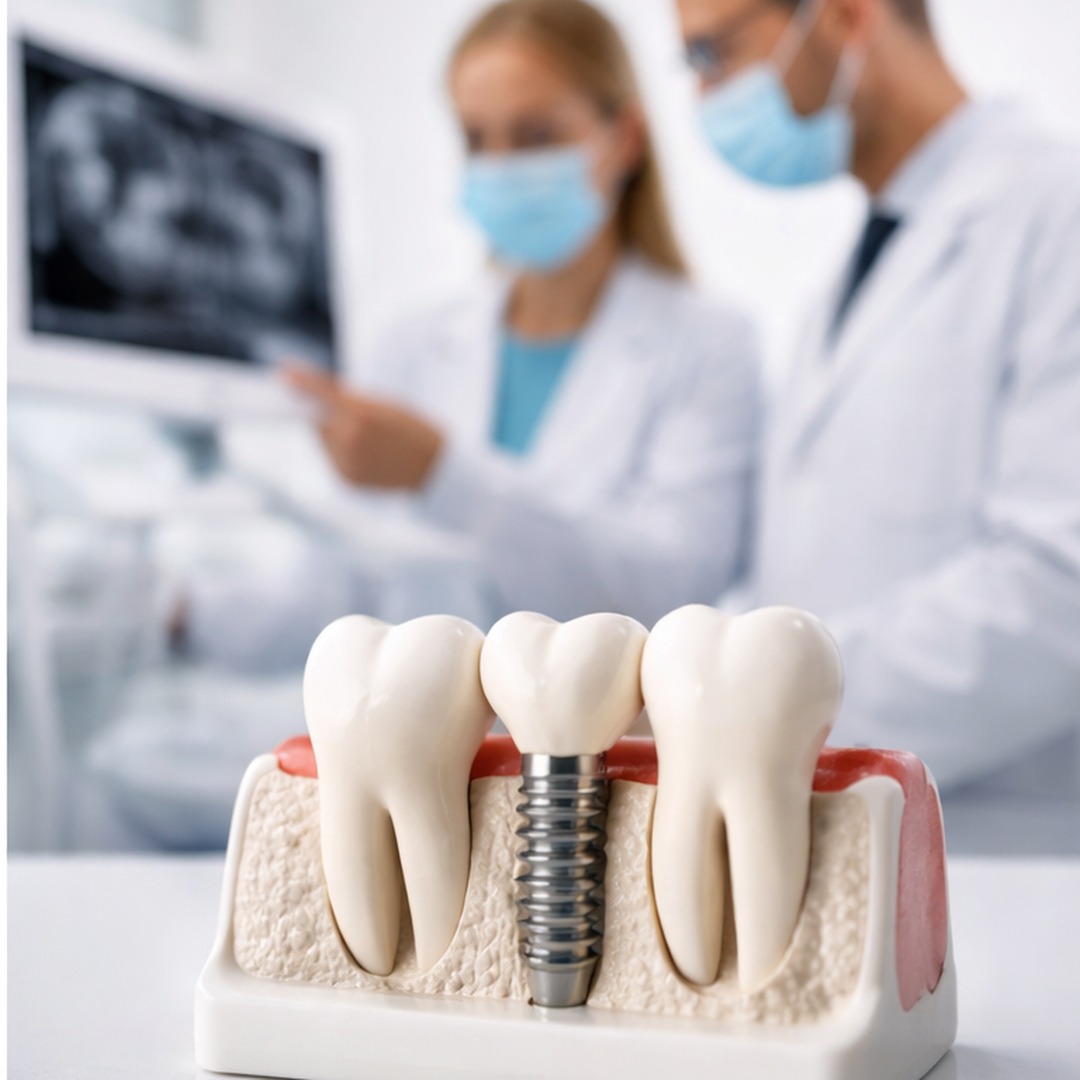

Duration: usually 1-2 visits + healing (depending on the situation)
Comfort: local anaesthesia; the procedure is usually well tolerated
Price: according to the findings (implant, abutment, crown, or bone filling)
For whom is a single tooth implant
A dental implant is a solution for a situation where one tooth is missing and you want to fill it in without grinding the adjacent teeth (as with a bridge). Most often, this is the loss of a tooth after an accident, after a complicated extraction or a long term missing tooth that impairs biting and aesthetics.
Typically, it makes sense if:
- you are missing one tooth and want a stable replacement
- you don’t want to grind healthy neighbouring teeth
- you have enough bone (or it can be replenished)
- you want a solution that cleans like your own teeth
- looking for a long-term option with proper hygiene and controls
How the treatment takes place
1) Examination and plan
First, we check the general condition of the oral cavity, bite and hygiene. Based on the clinical examination and the necessary diagnostics, we will propose a plan: whether the implant is suitable, what type of crown will be best and what the expected timetable will be.
2) Implant insertion
The implant (titanium/ceramic depending on the chosen solution) is inserted into the bone under local anaesthesia. The procedure itself usually takes tens of minutes, depending on the complexity. Healing and integration of the implant then takes place – the length varies according to individual conditions.
3) Implant crown and controls
After healing, the final crown is made and fitted to match the shape, colour and function of the surrounding teeth. This is followed by check-ups and recommendations for home care to ensure that the implant and surrounding tissues thrive in the long term.
Comfort and anaesthesia
The procedure is performed under local anaesthesia. You should not feel pain during the procedure, rather pressure. Tenderness and swelling is common after the procedure, which is usually resolved with the recommended regimen and commonly available analgesics (as recommended by your physician and your condition). We will explain everything to you beforehand – what to expect, what is normal and when to call.
Price and what influences it
- examination and diagnostics (scans as required)
- the implant itself
- abutment (connecting part)
- Crown (material, aesthetic requirements)
- possible addition of bone / lifting of the cavity (if necessary)
- the number of visits and the complexity of the case
View price list – Final price according to the findings and treatment plan.
Why Virtuoss dent
- Treatment plan explained in a human and non-pressured way
- Emphasis on function and aesthetics (to make the tooth look natural)
- Checks and care recommendations for long-term stability
- Possibility to follow up with further care (hygiene, periodontology) as needed
Frequently Asked Questions
Does the implant hurt?
The procedure is performed under local anesthesia, so you should not feel pain during the procedure. Tenderness and mild swelling is common after the procedure, which usually calms down gradually.
How long does the whole process take?
It depends on the healing process and the specific situation. Usually it is an examination + implant placement, then a healing period and then the crown fabrication.
Do I have to have enough bone?
Yes, the quantity and quality of bone is important. If there is not enough bone, sometimes the situation can be solved by adding bone – we will assess this during the examination.
Is an implant better than a bridge?
The implant does not require grinding of adjacent teeth. A bridge may be suitable in other situations. The best solution depends on the condition of the surrounding teeth, bite and hygiene.
How is the implant cleaned?
Like your own teeth – regular cleaning, interdental aids and regular dental hygiene. A check-up at the dentist is also important.
What are the risks or complications?
As with any procedure, there are risks (inflammation, poorer healing, etc.). They are minimized by proper indication, hygiene and adherence to the recommended regimen.
Can I go to work right after the procedure?
Often yes, but it depends on the range of performance and your comfort. We will recommend an individual regimen according to the course.
Who is not a suitable candidate?
In particular, the condition of the gums, hygiene, smoking and general health are assessed. Sometimes gingivitis needs to be treated first or hygiene needs to be stabilised.
How long will the implant last?
With good hygiene and regular check-ups, it can be a long-term solution. The exact lifespan is individual.
What if I’m afraid of the procedure?
We explain the procedure step by step, arrange a signal for a break and set the pace so that it is manageable.
Schedule an implant consultation
At the first visit we will examine the condition, explain the options (implant vs. bridge), propose a plan and an approximate budget.